


Last Updated: October 23, 2026
Quick Summary
Curated boutique clothing costs more because small batches mean higher per-unit wholesale prices, less buying power with suppliers, and more staff time spent choosing each piece. Freight, duties, payment fees, and overhead are spread across fewer sales, so each garment carries more of the cost. You pay for selection and construction, not scale.
- Boutiques buy in small batches, so suppliers charge more per unit than they do for large orders.
- A $49 dress worn 20 times costs about $2.45 per wear.
- Check fabric percentages, inside seams, lining, and a size chart with measurements before buying.
- Start with one piece from a new boutique to test fit and quality.
- Skip the boutique premium when product details are vague or the return policy is restrictive.
Table of Contents
- The Real Reasons Curated Boutique Clothing Costs More
- Boutique Clothing vs Fast Fashion: Where the Price Gap Comes From
- A Transparent Breakdown of a Boutique Garment's Price
- How to Tell If Clothing Is Good Quality Before You Buy
- Cost Per Wear Clothing: The Math That Changes Everything
- Online Boutique Shopping Tips for Smarter Purchases
- When Boutique Pricing Is Not Worth It
- Conclusion
- Frequently Asked Questions
The Real Reasons Curated Boutique Clothing Costs More
A boutique charges more because every step of its process costs more: smaller orders, higher per-unit wholesale prices, careful selection, and fewer customers to spread operating costs across. That is the short answer. At Lulu's Seaside Chic, we hear the longer version of this question often, so this guide explains why curated boutique clothing carries a higher price tag than a fast-fashion haul.

The difference is not one big markup. It is a stack of small, real costs. And once you see the stack, you can judge for yourself whether a piece earns its price.
Below, we break down where the money goes, how to spot quality before you buy, and when the premium is simply not worth it.
Boutique Clothing vs Fast Fashion: Where the Price Gap Comes From
Fast fashion wins on volume. A large retailer orders thousands of units of one design, so each unit costs very little to make, ship, and sell. Boutique clothing works the opposite way.
An independent boutique buys in small batches. That means:
- Higher per-unit wholesale price
- Less buying power with suppliers
- Limited inventory that sells out and cannot be reordered cheaply
- More staff time spent choosing each piece
Mass-market retail can absorb a bad design across millions of units. A boutique cannot. So curation becomes the product: fewer pieces, chosen more carefully.
This is the core trade-off. You pay for selection, not scale.
A Transparent Breakdown of a Boutique Garment's Price
Here is where your money actually goes on a boutique purchase. The exact split varies by item, but the categories are consistent. Think of the retail price as a stack of costs, each added before the garment reaches you.
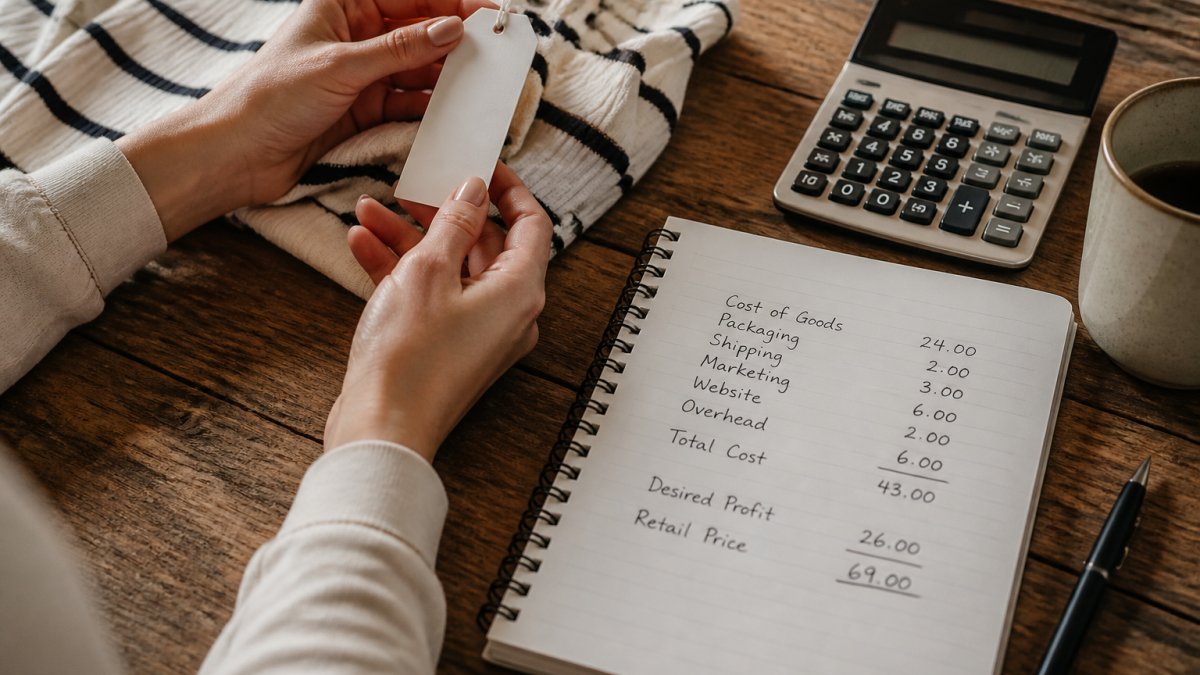
Wholesale Purchasing and Per-Unit Costs
Wholesale purchasing is the first big cost. A boutique pays a wholesale price per unit that is already higher than a large retailer's, because the order is small. Suppliers charge more per piece when they cannot count on volume.
Add shipping, customs, and payment fees on a small order, and the per-unit cost climbs again. Freight on a small batch is spread across fewer units, so each piece carries a larger share of the shipping bill. Duties and customs clearance add another layer. By the time the item reaches the shop, the boutique has spent a meaningful share of the retail price before selling a single piece.
Labor, Materials, and Construction
Better fabric costs more. So does careful construction: proper seams, lined panels, and hardware that lasts. Labor is the other factor. Garments made in smaller runs cost more to produce per unit because factories must set up machines and train workers for a short run, then switch to another style. That craftsmanship shows up in garment quality, and it is why two dresses that look alike online can feel completely different in person.
Freight, Duties, and Payment Fees
These are the costs shoppers rarely see. Customs duties and import taxes apply to the declared value, and payment processors take a percentage of every transaction. On a small order, these fixed and percentage costs eat a larger share of each garment's price.
Overhead and Retail Margin
A boutique must cover rent, utilities, staff wages, insurance, website hosting, photography, and marketing. These overhead costs are spread across fewer sales than a big-box store, so each item carries more of the burden. Finally, the retail margin is what allows the boutique to stay open, restock, and pay its team.
How to Tell If Clothing Is Good Quality Before You Buy
Quality is checkable, even online. You just need to know what to look for. Instead of relying on price or brand reputation, use the garment's own details as evidence.
Fabric Composition
Start with the fiber content, not the feel. Natural fibers like cotton, linen, wool, and silk generally cost more and behave differently than synthetic blends. Look for specific percentages (e.g., 95% cotton, 5% elastane) and consider how the fabric will wear: linen wrinkles but breathes, polyester resists wrinkles but may pill.
Seams and Stitching
Seams are where quality shows. Look for close-up photos of inside seams. A well-made garment has clean, finished seams (serged or French seams) without loose threads or skipped stitches. Stitching should be tight and even.
Italian Linen Wide-leg Pants →
Lining and Interfacing
Lined garments cost more to make and usually hang better. A lined bodice or skirt reduces transparency and adds structure.
Fit and Sizing Details
Fit is part of quality. Look for size charts with measurements, not just S/M/L.
Care Labels and Longevity
A care label tells you how the garment is expected to survive. "Dry clean only" on a casual piece may signal delicate construction or fibers that pill easily. Machine-washable natural fibers are often a sign of practical quality. Check whether the brand explains where and how pieces are made; transparency about production is a positive signal.
Return Policy as a Quality Signal
Use this checklist before you buy:
- Fabric content is listed with percentages (not just "poly blend")
- Close-up photos show seams and stitching
- Lining is mentioned or visible
- Size chart includes measurements
- Reviews mention fit and wear over time
- Care label instructions are clear
- The brand explains where and how pieces are made
- Return policy is clear and reasonable
Cost Per Wear Clothing: The Math That Changes Everything
Cost per wear is the price of a garment divided by the number of times you actually wear it. A $49 dress worn 20 times costs about $2.45 per wear.
This is where boutique clothing often wins. Pieces you reach for again and again spread their cost across months or years. That is the real value of durability and repeat wear.
Run the math before you decide:
- Estimate how often you will realistically wear it.
- Divide the price by that number.
- Compare the result across options.
A higher retail price can still be the cheaper choice per wear.
Online Boutique Shopping Tips for Smarter Purchases
Online boutique shopping works best when you buy with a plan. Try these steps:
- Read the fabric and sizing details before you fall for the photo.
- Check the return policy first, not last.
- Look for real customer photos, not just model shots.
- Start with one piece from a new boutique to test fit and quality.
- Use cost per wear to decide between two similar items.
At Lulu's Seaside Chic, our curated collection leans toward pieces you can wear indoors and out, from brunch to a beach walk. Thousands of happy customers have built their wardrobes this way. Our loyalty club also gives early access to new drops, so you can plan purchases instead of impulse-buying.
When Boutique Pricing Is Not Worth It
Boutique pricing is not worth it when the piece will not fit your real life. A special-occasion item worn once rarely earns its premium. Trend pieces that date quickly are another poor bet.
Skip the boutique premium when:
- You need a basic you will replace often anyway
- The product details are vague or missing
- The return policy is restrictive
- The style does not match what you already wear
Conclusion
The price gap between boutique and fast fashion comes down to scale, curation, and construction. Small batches cost more per unit. Careful selection costs time. Better materials and labor cost money. Whether that premium is worth it depends on one thing: how often you will wear the piece.

If you want coastal-inspired apparel built for repeat wear, Lulu's Seaside Chic curates pieces for everyday elegance and warm-weather escapes. Our loyalty club offers early access to new drops, and our collection spans dresses, tops, and sweaters made for real life. Start with one piece, track your cost per wear, and see the difference for yourself.
Frequently Asked Questions
Why does boutique clothing cost more than fast fashion?
Boutique clothing costs more because of small-batch production, higher wholesale per-unit costs, and limited buying power compared to mass-market retailers. A boutique might order 50 units of a dress, while a large retailer orders 5,000. That difference means the boutique pays more per piece from the wholesaler, and those costs carry through to the retail price. Curation also adds value: someone has already filtered out the poorly made pieces so you are not sorting through hundreds of options.
Is boutique clothing actually better quality than large retailers?
Not automatically, but curated boutiques often select garments with better fabric quality, construction, and durability because their business depends on repeat customers. You still need to check for yourself. Look at stitching density, fabric weight, and whether the garment holds its shape. A boutique piece made from 100% Italian linen, like wide-leg pants, is crafted from quality fabric, but the label alone is not a guarantee.
How do I use cost per wear to justify a higher price?
Divide the retail price by the number of times you expect to wear the item. A $75 pair of Italian linen wide-leg pants worn 50 times costs $1.50 per wear. Cost per wear clothing math often shows that a higher upfront price is cheaper over time, especially for pieces you reach for weekly. Track your actual wear count for a month to see which items earn their place.
What should I check before buying clothes from an online boutique?
Before buying from an online boutique, check the return policy, look for real customer photos, and read the fabric composition carefully. Look for signs of curation, like a cohesive collection and detailed product descriptions.
