


Table of Contents
- Boutique Baby Gear vs Budget Baby Gear: What Sets Them Apart
- Where Boutique Prices Come From: Quality, Materials, and Design
- Best Baby Gear Worth Splurging On (and What to Skip)
- Baby Gear Essentials for New Parents: A Practical Checklist
- Secondhand Baby Gear Safety: What to Check Before You Buy
- Total Cost of Ownership: Price Premium vs Resale Value
- How to Decide If Boutique Baby Gear Is Worth It for Your Family
- Conclusion
- Frequently Asked Questions
Last Updated: October 21, 2026
Boutique Baby Gear vs Budget Baby Gear: What Sets Them Apart
Walk into any big-box store and you'll find a stroller for a modest price. Open a boutique site and the same category of item can cost several times more. At Lulu's Seaside Chic, we curate coastal baby pieces for families who want items that feel considered rather than mass-produced.
**Boutique baby gear is the small-batch, design-led end of the market: items sold through independent retailers and specialist brands, often in limited runs, with an emphasis on fabric quality, finish and distinctive styling.
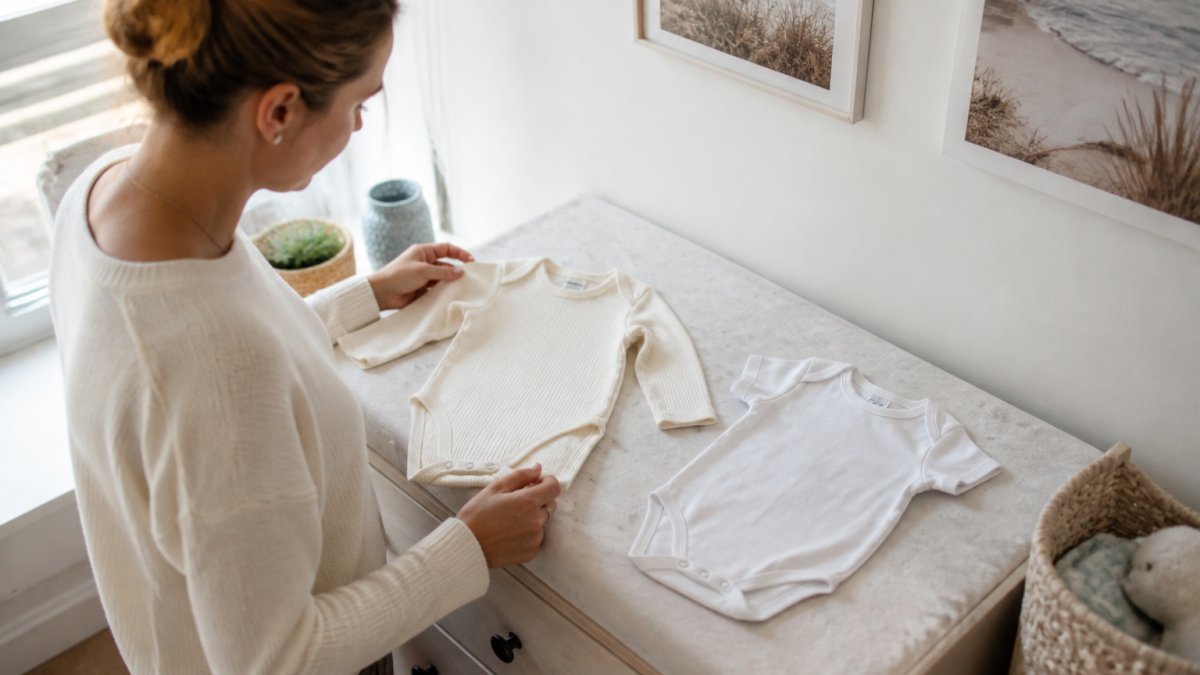
The practical difference shows up in three places: materials, construction and design. A boutique bodysuit tends to use softer, longer-staple cotton with flat seams; a budget one often uses a thinner knit with bulkier stitching. Neither is automatically "better," but the gap is real and you can feel it.
Where Boutique Prices Come From: Quality, Materials, and Design
Boutique pricing reflects smaller production runs, tighter material specifications and more design labour per unit. A boutique brand might order a few hundred pieces of a print instead of tens of thousands, which raises the per-unit cost before the item ever reaches a shelf.
Materials matter most. Look for clear fibre content, a stated weight or GSM on knits, and finishes described in plain terms. Organic cotton, bamboo blends and brushed fleece cost more at the mill, and that cost travels with the product.
Design carries the rest. Unique designs, coastal-inspired prints and colour stories that hold together across a collection take work. Whether that's worth paying for is a style question, not a safety one.
What most buying guides miss: the premium isn't evenly distributed. Fabric quality justifies a price gap far more reliably than a decorative detail does. Spend on what touches your baby's skin and what takes the wear.
Best Baby Gear Worth Splurging On (and What to Skip)
Most buying guides treat "baby gear" as one category. It isn't. A stroller, a carrier, a car seat and a sleep sack are different products with different failure modes, different lifespans and different reasons a premium price might, or might not, be justified. Here's a product-by-product breakdown so you can decide where boutique features earn their keep and where a basic option is genuinely sufficient.
Strollers
Where premium matters: suspension and wheel quality, one-handed fold mechanisms, brake design, canopy coverage and fabric breathability. If you walk daily on uneven pavements or use public transport, a stroller that folds compactly and pushes easily earns its price in daily use.
Where it doesn't: decorative fabrics, branded accessories and travel-system compatibility you'll never use. A mid-range stroller with good wheels and a reliable brake will outperform a boutique model with poor geometry.
Practical check: fold and unfold it in the shop with one hand while holding a weighted bag. If you can't, it will frustrate you daily.
Baby Carriers
Where premium matters: ergonomic positioning (supported hips and spine), breathable fabric, even weight distribution and adjustable fit for multiple caregivers. A carrier worn for hours needs to distribute load across hips and shoulders, not dig into them.
Where it doesn't: limited-edition prints and fashion-forward colourways. A well-fitted mid-price carrier will outperform a boutique one that doesn't fit your body.
Practical check: look for a wide, adjustable seat that supports the baby knee-to-knee and a panel tall enough to support the head. Try it on with a weighted doll before buying.
Car Seats
Where premium matters: side-impact protection features, ease of correct installation, harness adjustability and clear labelling. The safest seat is the one installed correctly every time, premium features that improve installation consistency are worth paying for.
Where it doesn't: leather trim, cup holders and branded covers. These add cost without adding safety.
Practical check: confirm the seat meets current safety standards in your country and fits your vehicle. A basic seat installed correctly beats a premium seat installed poorly.
Sleep Products
Where premium matters: breathability, fit (a sleep sack that's too loose is a hazard), fabric that washes well and holds shape, and firm, flat sleep surfaces. Safe sleep guidance is unambiguous: a firm, flat mattress with a fitted sheet and no loose bedding.
Where it doesn't: decorative bumpers, pillows and loose blankets, these are safety risks, not upgrades. Boutique sleep sacks with breathable fabrics and correct sizing are a reasonable spend because they're used nightly for months.
Practical check: follow current safe-sleep guidance from a recognised authority in your country, and replace any sleep product that has been recalled or shows wear.
Everyday Clothing
Where premium matters: fabric weight and fibre content, flat seams, and how the garment holds up after repeated washing. A boutique bodysuit in longer-staple cotton often survives more washes than a thinner budget knit.
Where it doesn't: newborn sizes and trend-led prints your baby will wear a handful of times.
What to Skip or Buy Budget
- Newborn-sized outfits your baby wears a handful of times
- Trend-led prints in sizes under three months
- Anything that duplicates a function you already own
- Decorative accessories that add cost without adding safety or comfort
Baby Gear Essentials for New Parents: A Practical Checklist
Start with function, then add style. Here's the checklist we'd hand a first-time parent:
- Safe sleep space: firm mattress, fitted sheet, no loose bedding
- Infant car seat, correctly installed and checked
- Baby carrier or wrap for hands-free contact
- Six to eight bodysuits and sleepers in rotation
- Two or three swaddles or sleep sacks in the right size
- Stroller suited to your daily routes, not your dream routes
- Changing setup with a wipeable surface
- One or two "nice" outfits for photos and visits
The last item is where boutique pieces earn their place. A well-made coastal baby outfit for a shower gift or first photos does real work, even if it isn't the workhorse of the drawer.
Secondhand Baby Gear Safety: What to Check Before You Buy
Secondhand baby gear can be a smart way to afford boutique quality, but safety comes down to three checks: recalls, completeness and condition. Here's how to run each one properly.
1. Check for Recalls
Before you pay anything, run the model number and brand against the manufacturer's recall list and your country's product safety regulator. In the US, that's the Consumer Product Safety Commission (CPSC); in the UK, the Office for Product Safety and Standards; in the EU, Safety Gate. Recalls happen across all price points, boutique brands are not immune. If a product has been recalled, do not buy it, even if the seller says it's fine.
2. Confirm Completeness
Missing parts are the most common hidden problem. Check that every strap, buckle, screw, instruction booklet and accessory is present. Manufacturers often sell replacement parts, but only for current models. If the model is discontinued and a part is missing, walk away.
3. Inspect Condition
Look for cracks in plastic shells, fraying on webbing, missing hardware, rust on metal frames and expired components. Some items have a manufacturer's expiry date, car seats and some helmets, for example, because materials degrade over time. Check the date stamp.
Category-by-Category Guidance
Safer secondhand: hard goods like strollers and frames can be fine if they're complete, undamaged and not recalled. Check the brake, the fold mechanism and the wheels.
Riskier secondhand: car seats are the category to avoid used. You can't verify whether a seat has been in a crash, and the shell can weaken invisibly. Many safety bodies advise against used car seats for exactly this reason, and we'd follow that guidance. The same caution applies to any item where a hidden failure could be catastrophic.
Soft goods: clothing and sleep sacks are generally fine secondhand if seams, snaps and any flame-resistance labelling are intact. Wash everything before use.
Before You Use It
- Re-check the recall list for the exact model
- Read the manufacturer's instructions if they're included
- Test all mechanisms (brakes, folds, buckles) before putting your baby in
- Discard any product with cracks, missing parts or signs of crash damage
Total Cost of Ownership: Price Premium vs Resale Value
The honest comparison isn't sticker price versus sticker price. It's cost per use, minus what you can recover.
| Factor | Boutique Baby Gear | Budget Baby Gear |
|---|---|---|
| Upfront price | Higher | Lower |
| Uses before outgrown | Similar | Similar |
| Wear and tear resistance | Generally better | Variable |
| Resale or consignment value | Often stronger | Often minimal |
| Cost per wear | Can be lower on daily items | Can be lower on rare items |
A boutique sleep sack worn every night for months can land at a lower cost per wear than a cheap one that pills and gets replaced. A boutique dress worn twice cannot. The maths favours premium on high-frequency items and budget on low-frequency ones.
How to Decide If Boutique Baby Gear Is Worth It for Your Family
Run the decision in this order:
- Budget first. Set a total number before you browse.
- Frequency second. Rank each item by how often it will be used.
- Safety third. Never economise on car seats or sleep surfaces.
- Style last. Spend what's left on the pieces you'll actually enjoy.
If daily-use items are covered and you still have budget, boutique pieces for gifts, photos and everyday wear are a reasonable spend. If budget is tight, buy budget on the workhorses and put the difference toward safety gear.
Conclusion
The real challenge isn't choosing between boutique and budget, it's matching each item to how much use it will actually get. Lulu's Seaside Chic curates coastal baby gear and apparel with an eye on exactly that balance: pieces designed for both indoor chilling and outdoor strolling, and unique items for celebrations. Join our loyalty club to enjoy exclusive early access to our latest drops and stay ahead of the trends. Start with the essentials, spend where it counts, and build the rest from there.
Frequently Asked Questions
Is boutique baby gear worth the extra cost?
It depends on the item. Boutique baby gear often costs more because of higher-grade fabrics, stricter safety testing, and smaller production runs. For items your baby uses daily, like a carrier or sleep sack, that premium can pay off in comfort and durability. For short-lived items like newborn outfits, budget options make more sense. Compare the price premium against how long you'll use the item and whether it holds resale value.
What is the difference between boutique and regular baby gear?
Boutique baby gear typically comes from smaller brands with curated designs, premium materials like organic cotton, and limited production runs. Regular or budget baby gear focuses on volume and lower prices, often using synthetic fabrics and simpler construction. The gap shows up in fabric softness, ergonomic design, and how well items survive repeated washing. Safety standards apply to both categories, so always check certifications regardless of price.
Are boutique baby products better quality?
Not automatically. Boutique brands often use softer fabrics, reinforced stitching, and more rigorous testing, which can mean better durability and comfort. But quality varies by brand, so check customer reviews and material details rather than assuming a higher price guarantees better construction. Look for specifics like organic certification, ergonomic design, and clear care instructions. A well-made budget item can outperform a poorly made boutique one.
What baby items should you avoid buying new?
Many parents save by buying secondhand for short-use items like newborn clothing, bouncers, and some toys. However, avoid secondhand car seats unless you know their full history, since hidden damage or missing labels can compromise safety. Also skip used cribs with drop sides and any gear that has been recalled. For secondhand baby gear safety, always check recall lists, inspect for wear and tear, and confirm all parts and instructions are included.